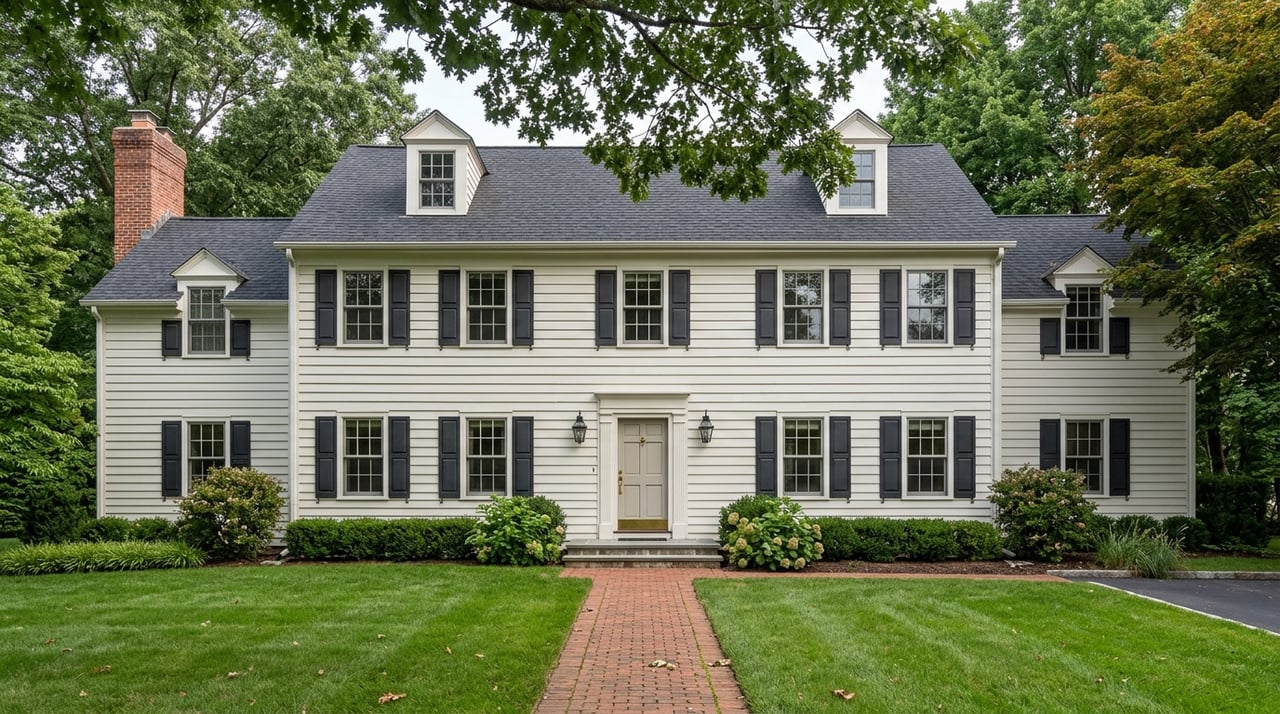
Guide to Property Taxes on Harding Township Estates
April 23, 2026
April 23, 2026
If you are considering an estate purchase or preparing to sell in Harding Township, property taxes are likely one of the biggest numbers on your mind. That makes sense because in a market with multi-acre parcels and higher assessed values, even small misunderstandings can affect your budget in a meaningful way. The good news is that Harding’s tax structure is easier to understand once you know how assessments, rates, and reassessments work. Let’s break it down.
In Harding Township, property taxes are based on assessed value, not just acreage or square footage alone. New Jersey treats property tax as an ad valorem tax, which means the bill is tied to the property’s value, with real property valued as of October 1 of the pretax year, according to the New Jersey Division of Taxation.
For estate homes, there is no separate tax formula just because a property is large or high-end. Under the state’s assessment rules, land and improvements are assessed under uniform standards at market value, and all counties in New Jersey use 100% as the assessment level, as explained in the state’s revaluation brochure.
That means your tax bill generally reflects the value of the land plus the home and other improvements on the property. In a place like Harding, where lot size, architectural details, and accessory features can vary widely, those details matter.
When a property is assessed, the assessor may consider several factors that affect market value. The state’s property tax assessment guidance notes that assessors can review:
For larger properties, inspections tied to a revaluation can also capture features that add value beyond the main house. According to the state’s revaluation materials, those features may include:
If you own or are shopping for an estate-style home in Harding, this is important context. A home with a guest structure, pool, or extensive finished lower level may carry a different tax profile than another home with similar square footage but fewer improvements.
One of the most common misconceptions in estate markets is that a larger parcel receives a better tax treatment just because it is large. In New Jersey, that is not how it works.
The state’s farmland assessment rules require at least 5 acres that are actively devoted to agriculture or horticulture for the prior two years, along with meeting specific income requirements. Simply owning a large parcel in Harding does not create a lower tax classification, as outlined by the New Jersey Department of Agriculture.
If you are buying a property with substantial land, it is worth confirming whether any farmland assessment currently applies and whether it will continue after a transfer. You do not want to assume that acreage alone will reduce carrying costs.
For 2025, Harding Township’s general tax rate is 1.234 per $100 of assessed value, according to the New Jersey Division of Taxation tax rate table. That is about 12.34 mills.
The township’s 2026 preliminary budget presentation uses a helpful example for a property assessed at $1,000,000. It breaks the bill into:
This breakdown is useful because it shows that the largest portions of the bill come from the school and county components, not just the municipal line item.
In Harding’s estate market, many buyers and sellers are dealing with assessed values well above the township’s $1,000,000 example. Using the 2025 total rate of 1.234, rough annual taxes work out to approximately:
These figures are helpful budgeting anchors, but they are still just estimates. Actual bills can vary based on changes in tax rates, added assessments, and any other applicable charges.
A reassessment or revaluation does not happen at random. The state explains in its revaluation brochure that these processes may be needed when properties are no longer being assessed uniformly.
Some of the factors that can point to a need for revaluation include:
For homeowners, the key takeaway is this: a revaluation does not automatically mean the town as a whole is paying more in taxes. Instead, it can shift the tax burden among properties by resetting values to current market levels.
Even if your home does not sell, changes to the property can still affect future taxes. The state says that additions or improvements completed after the October 1 valuation date may result in an added assessment so the property pays its fair share of taxes during the year, according to the state’s local property tax overview.
For estate owners in Harding, that can be especially relevant if you are planning a significant project. Improvements that may affect future carrying costs can include:
If you are buying a home with renovation plans, or preparing a property for sale with strategic upgrades, it helps to factor in not just construction cost but the possibility of future tax changes as well.
A practical way to estimate taxes is to start with the assessed value and apply Harding’s current total tax rate. From there, add a cushion for possible changes such as future rate adjustments, appeal outcomes, or added assessments tied to improvements.
The township’s published example of $12,350 per $1,000,000 of assessed value is a useful shorthand for quick planning. If you are comparing multiple estate properties, this can help you evaluate carrying costs more realistically before you make an offer.
For buyers, this is especially important because assessed value and market value are related, but not always identical. Looking at both helps you create a more accurate ownership budget.
If you believe an assessment is incorrect, timing matters. Harding Township’s assessor page says ordinary assessment appeals are due April 1 and are handled through the Morris County Tax Board.
The same page, together with the state appeal rules, notes that in municipalities undergoing a revaluation or reassessment, the appeal deadline is May 1. Properties assessed above $1,000,000 may also appeal directly to Tax Court.
For added or omitted assessments, the state uses Form AA-1. The filing deadline is December 1 of the tax year or 30 days after the bulk mailing of the added or omitted bills, whichever is later.
Payment timing matters too. Harding’s tax collection page states that quarterly taxes unpaid after the 10th of February, May, August, and November accrue interest back to the first of the quarter at 8% on the first $1,500 and 18% above that. On higher-value homes, that can become expensive quickly.
For buyers, understanding property taxes helps you decide what is truly comfortable long term. A beautiful estate home may fit your purchase price target, but the tax bill also needs to fit your annual budget.
For sellers, tax clarity can improve conversations with serious buyers. When your home is presented with accurate, thoughtful guidance around carrying costs, buyers can make decisions with more confidence.
In Harding Township’s estate market, details matter. When you understand how assessments, improvements, and local rates interact, you are in a better position to buy, renovate, or sell strategically.
If you are weighing a purchase, planning updates, or preparing to bring an estate property to market, Julia Kovacs can help you evaluate the full picture with local insight and a thoughtful, design-forward approach.
Stay up to date on the latest real estate trends.


Get assistance in determining current property value, crafting a competitive offer, writing and negotiating a contract, and much more. Contact me today.