Harding Township Septic and Wells on Acreage: Buyer Guide
March 24, 2026
March 24, 2026
You picture a long, tree-lined drive, quiet mornings, and real privacy. In Harding Township, that vision is real, yet it comes with private systems and land rules you need to understand before you buy. If a property has acreage, you are likely relying on a septic system, a private well, and your own driveway and woodland stewardship. This guide walks you through the essentials, inspections, costs, and timelines so you can move forward with confidence. Let’s dive in.
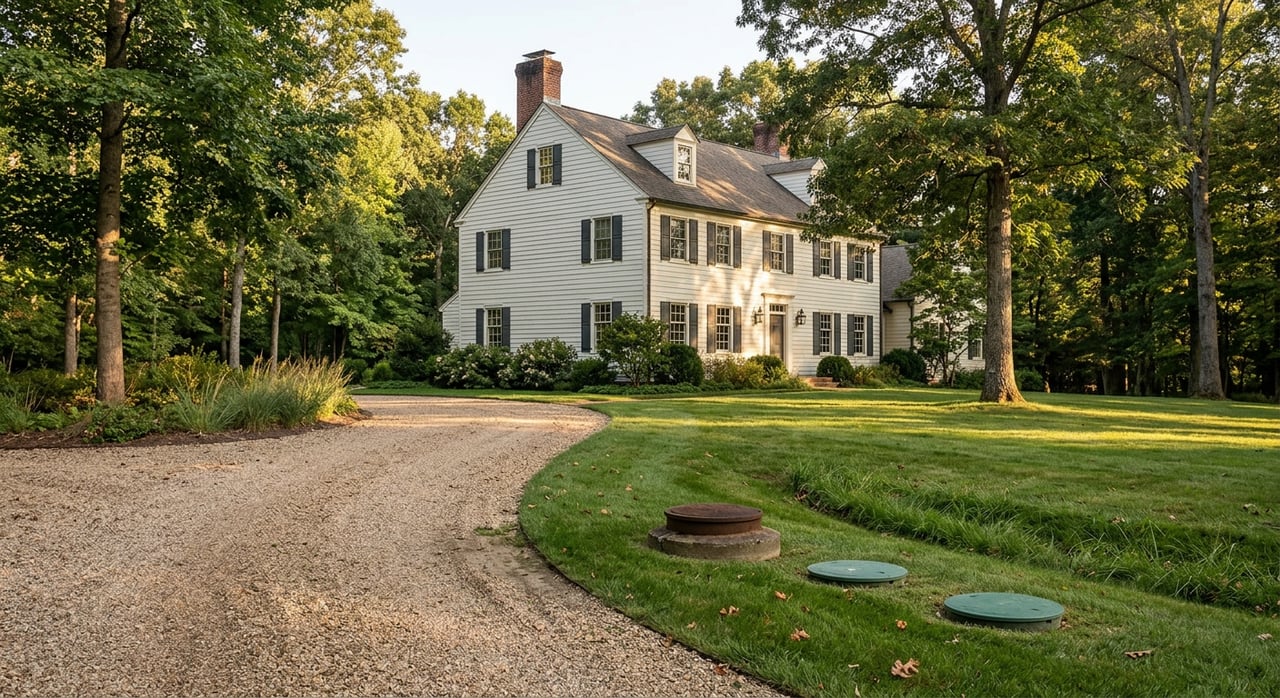
Large-lot living in Harding often means managing your own infrastructure. Instead of public sewer and water, many estate properties use on-site septic and private wells. Local ordinances set specific standards for how systems are sited, sized, and maintained. That includes required setbacks, reserve areas for future septic replacement, and rules around tree conservation that can affect clearing and construction. You will also want to confirm access, including easements, emergency-vehicle requirements, and who maintains long private roads.
Harding regulates the installation, alteration, repair, and abandonment of septic systems through its Board of Health. You need permits, professional plans, soil suitability reports, and an as-built to obtain approvals. The ordinance sets minimum setbacks and requires that wells be separated from septic components by at least 100 feet. It also requires a reserve area equal to 100 percent of the disposal area for future replacement. Garbage disposals are prohibited for homes on on-site systems. Review the township code to see the full set of standards and timelines for permits and inspections. You can confirm these requirements in Harding’s septic ordinance in Article III of the municipal code. See the Harding septic code for details.
Harding also sets well-related requirements during construction and inspections. The township’s well permit form notes the 100-foot separation from septic and that well casings must extend at least 18 inches above grade. The Health Department must witness the setting of the casing, so coordination and timing matter. You can review those requirements in the Board of Health well permit form. Review the well permit form.
Order a dedicated septic inspection in addition to your home inspection. A thorough inspection typically includes opening the tank, measuring sludge and scum after a pump-out, checking baffles and tank integrity, opening the distribution box, and visually assessing the drainfield for seepage or ponding. If the system includes pumps or alarms, those are checked too. Inspectors often compare what they find on site with the municipal as-built and permit file to confirm location and capacity.
For a quick primer on homeowner best practices and what warning signs look like, see this New Jersey resource on septic systems. Read the ANJEC septic guide.
Permitting and construction for a replacement can take weeks to several months depending on design complexity, wetlands or steep-slope reviews, and contractor availability. Harding’s ordinance also includes permit validity and inspection timing rules, so build those checkpoints into your contract timeline. Review Harding’s septic ordinance.
New Jersey’s Private Well Testing Act (PWTA) requires well testing during real-estate transfers. Samples must be collected by a New Jersey certified laboratory or its authorized representative, and buyers and sellers must receive and acknowledge the results before closing. PWTA panels now include PFAS compounds such as PFOA, PFOS, and PFNA, which has increased testing costs compared to prior years. Plan for a few days to a couple of weeks for lab scheduling and results, depending on the parameter list. Review the NJDEP PWTA overview.
PWTA parameters include total coliform bacteria, nitrate, arsenic in many northern counties including Morris, gross alpha radiation where applicable, and in many cases volatile organic compounds. Due to local geology, arsenic and gross alpha are common areas of focus in North Jersey. Since PFAS were added, many transfers now test for those compounds and compare results to New Jersey’s strict maximum contaminant levels.
In Harding, your well must meet local siting standards, including the 100-foot separation from septic and a casing that extends at least 18 inches above grade. The Health Department witnesses casing setting, so ask for the construction details in the seller’s file. For capacity and reliability, consider a pumping or yield test to document gpm, static water level, and equipment. For drilling and cost context statewide, review New Jersey well-owner guidance. See New Jersey well-owner guidance.
Estate properties in Harding often have long private lanes or shared drives. Early in escrow, confirm the following:
Costs vary with length, grading, culverts, and surface. Gravel is the lowest upfront cost but needs periodic regrading. Asphalt or concrete carries a higher initial investment, and very long lanes can become five-figure projects. Obtain local estimates tied to your site conditions.
If you plan to clear for a new driveway, a septic reserve, or expanded outdoor spaces, check local rules first. Harding’s Tree Conservation ordinance regulates removal, regrading near trees, and mitigation in certain cases. Permits and replanting can add time and cost, so align your plan with the ordinance before you schedule work. Review Harding’s tree ordinance.
For large wooded tracts, also review your deed for any conservation easements or participation in county or state preservation programs that may limit clearing or harvesting. Depending on your plans, consult an arborist or forester for hazard trees, invasive species, or slope-stability best practices after clearing.
Use this sequence to keep escrow smooth and predictable:
Acreage in Harding delivers a rare blend of privacy, beauty, and proximity to the region’s hubs. You can protect that value by approaching septic, well testing, driveway access, and woodland rules with the same care you bring to the home itself. Clear contingencies, early testing, and a precise review of permits and as-builts will keep surprises out of your closing.
If you want seasoned guidance and a streamlined path to yes, connect with Julia Kovacs for local expertise and a calm, design-forward approach to buying in Harding.
Stay up to date on the latest real estate trends.
Get assistance in determining current property value, crafting a competitive offer, writing and negotiating a contract, and much more. Contact me today.