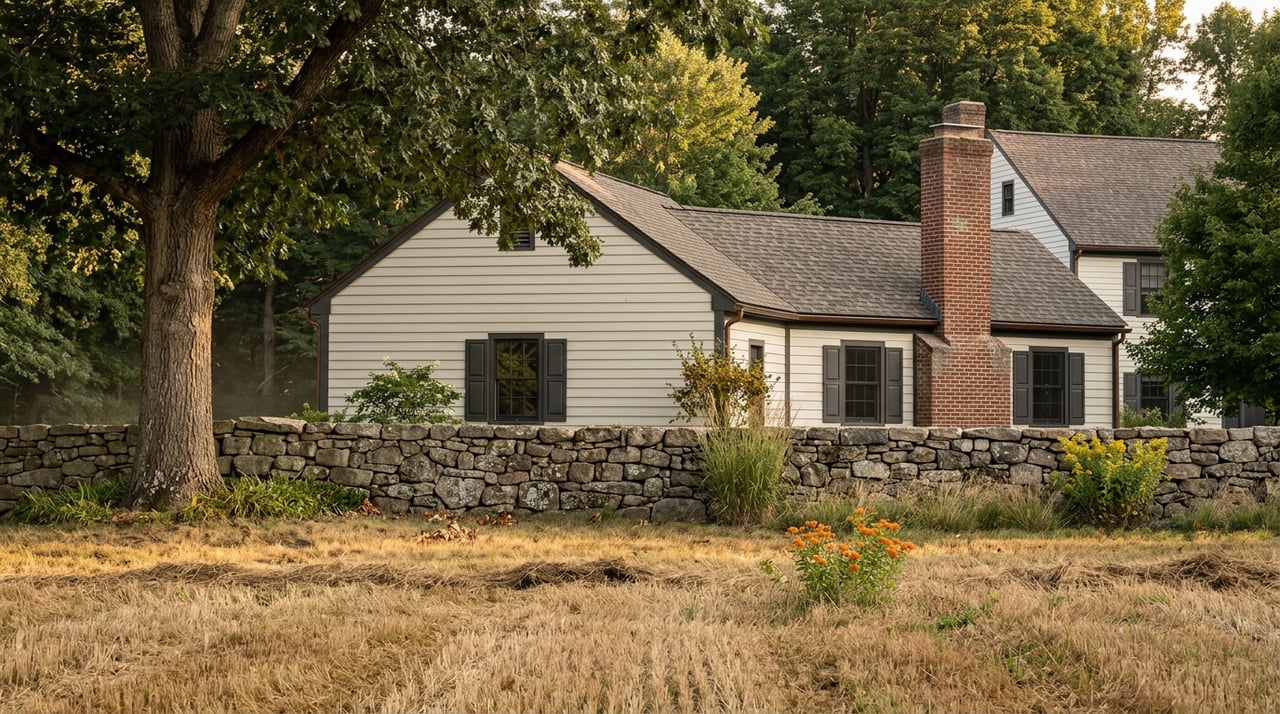
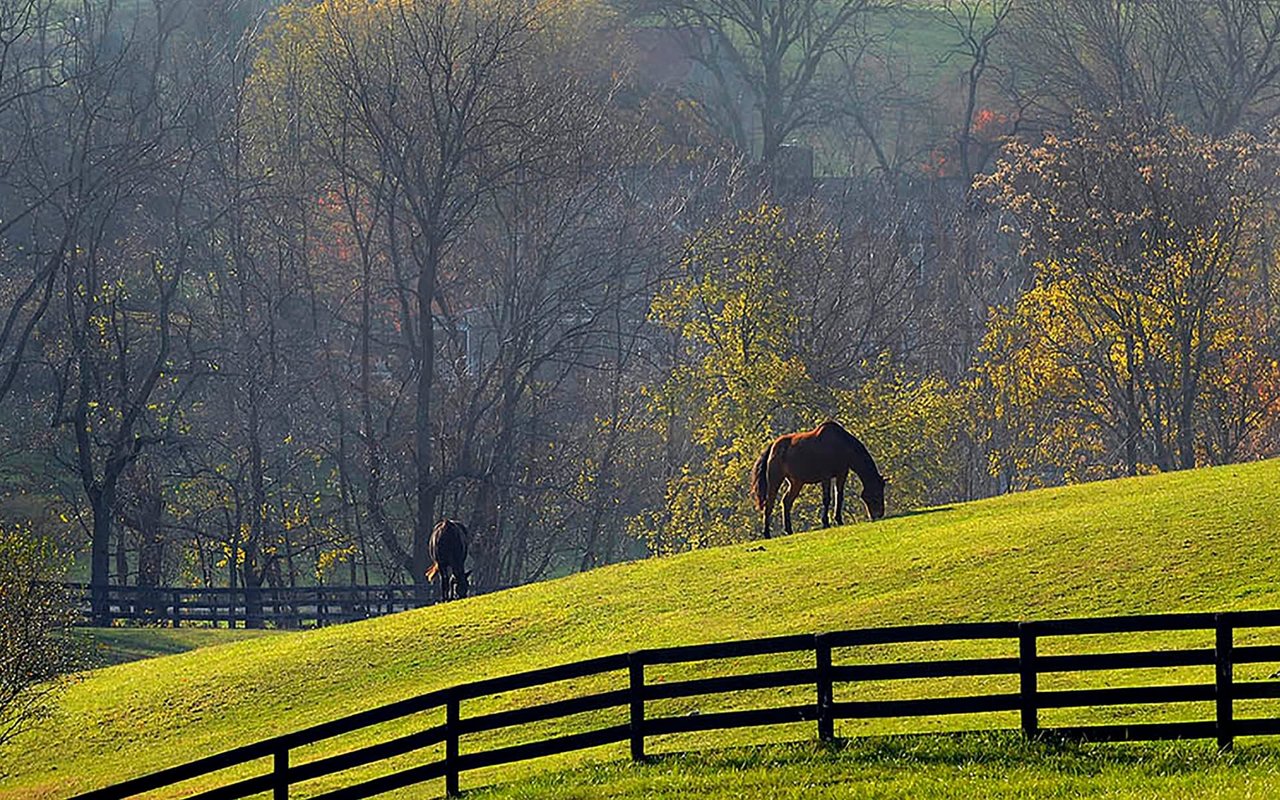
When does a Harding Township property truly count as an estate? If you are preparing to sell a multi-acre home or searching for one, the definition matters. Understanding what signals “estate” in Harding shapes how you filter listings, present a property, and price it with confidence. This guide breaks down the physical features, local constraints, and marketing tactics that set estate properties apart. Let’s dive in.
What “estate” means in Harding
In real estate, “estate” is a market term, not a single legal category. In Harding Township, it generally signals multiple acres, a private setting, and higher-end amenities that exceed what you find in more suburban New Jersey towns. The rural character of Harding, including New Vernon and surrounding areas, raises expectations for acreage, seclusion, and estate-style features.
Your takeaway: an estate here blends usable land, privacy, and architectural scale, interpreted relative to Harding’s low-density, conservation-oriented setting.
Acreage and lot setup
- Multiple acres are typical. Local agents often start with several-acre minimums when searching for Harding estates. The exact threshold varies by neighborhood and market conditions.
- Usable acreage matters more than gross acreage. Setbacks, wetlands, steep slopes, and conservation easements can limit where you can build or expand.
- Estate parcels often support long driveways, separation between the main house and outbuildings, and more than one building envelope.
Privacy and setting
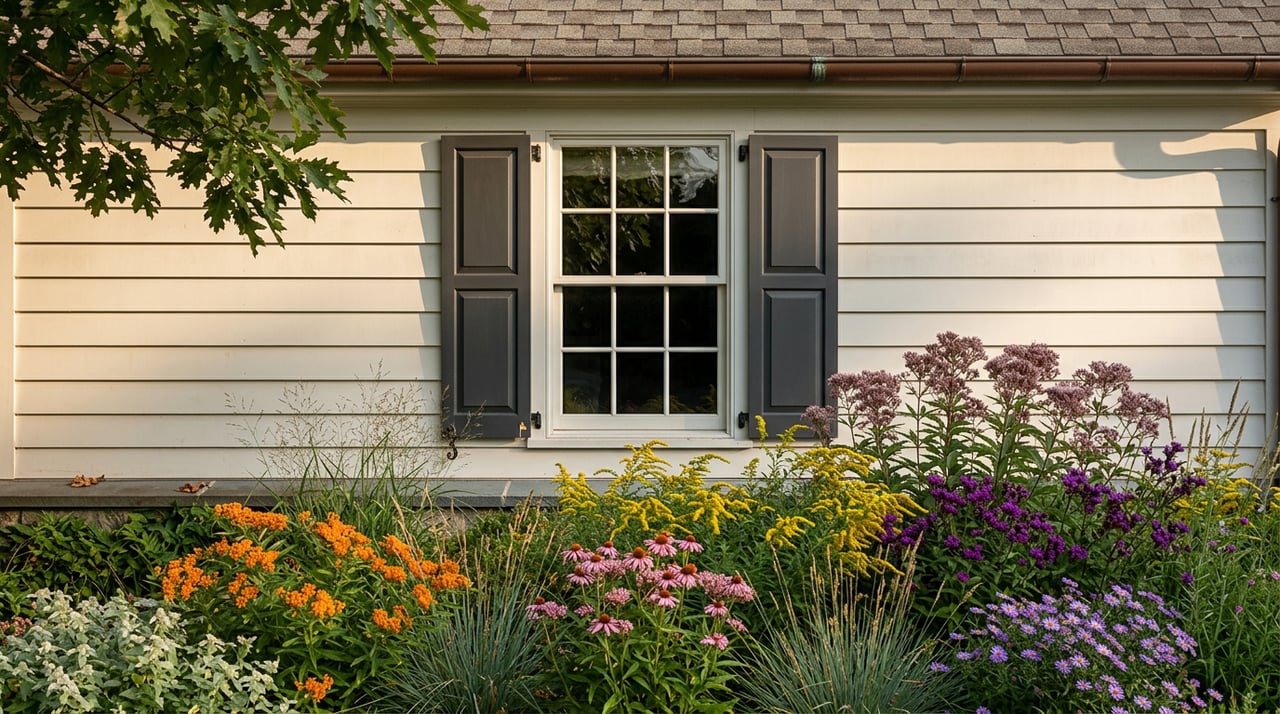
- Mature woods, buffering plantings, and rolling topography add privacy and define the approach to the home.
- Gated or long private driveways and meaningful setbacks from the road reinforce an estate feel.
- Elevated sites with long sightlines or pastoral views enhance desirability and value.
Amenities and outbuildings
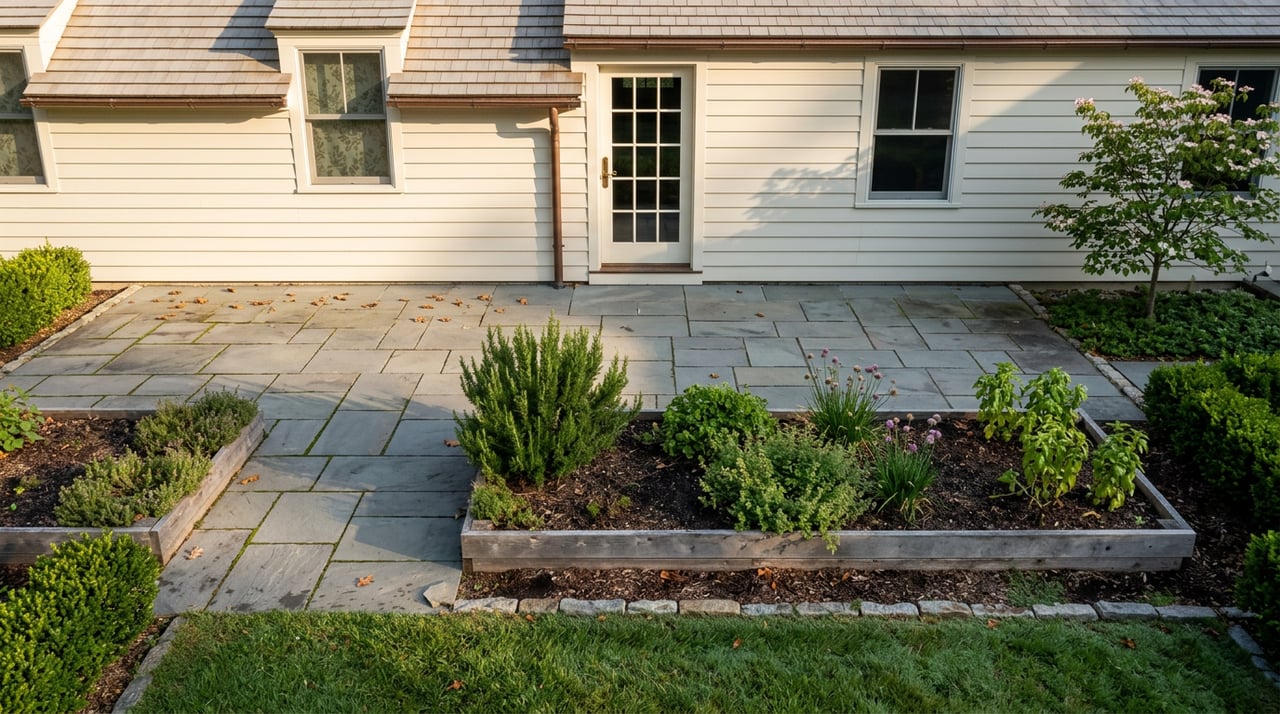
- Common features include large garages, guest or carriage houses, in-ground pools, tennis courts, extensive terraces, and formal gardens.
- Equestrian elements are frequent on larger parcels, such as barns, paddocks, and arenas.
- Many estates rely on private wells and septic systems. You may also see whole-house generators, private ponds, stormwater systems, or extensive irrigation.
Architecture and heritage
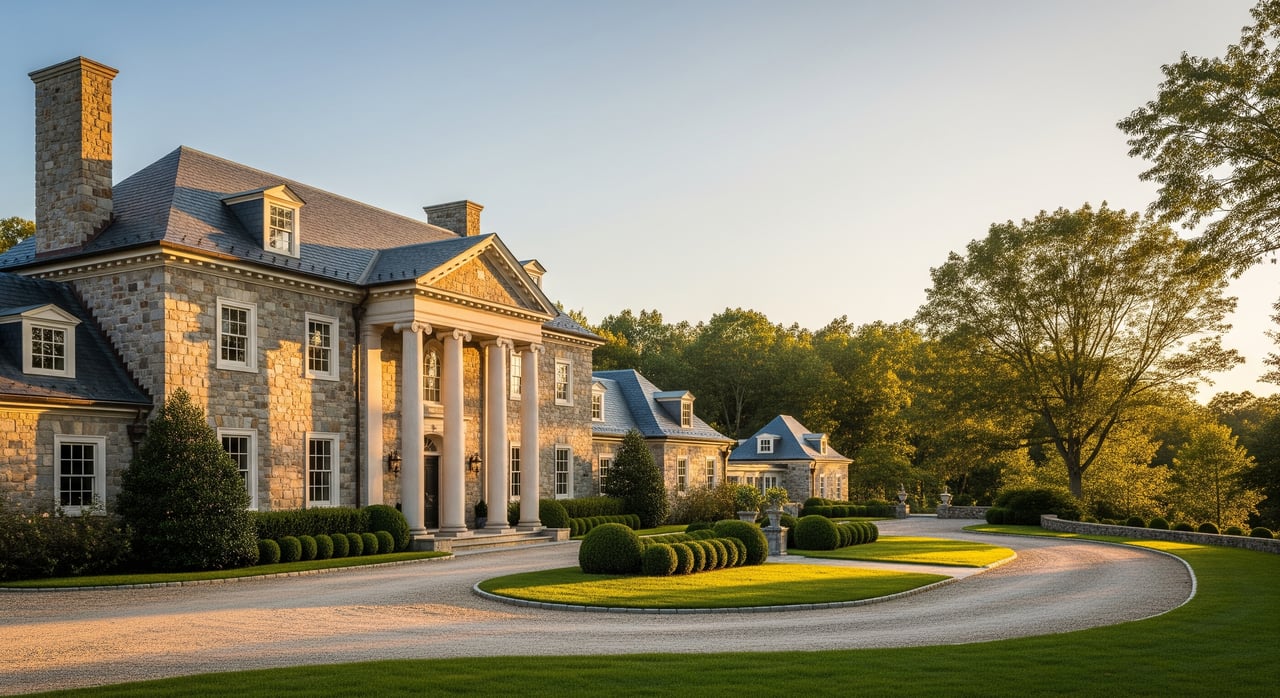
- Traditional high-end styles in New Jersey are common, including Georgian, Colonial, Tudor, and Federal, along with architect-designed contemporary homes.
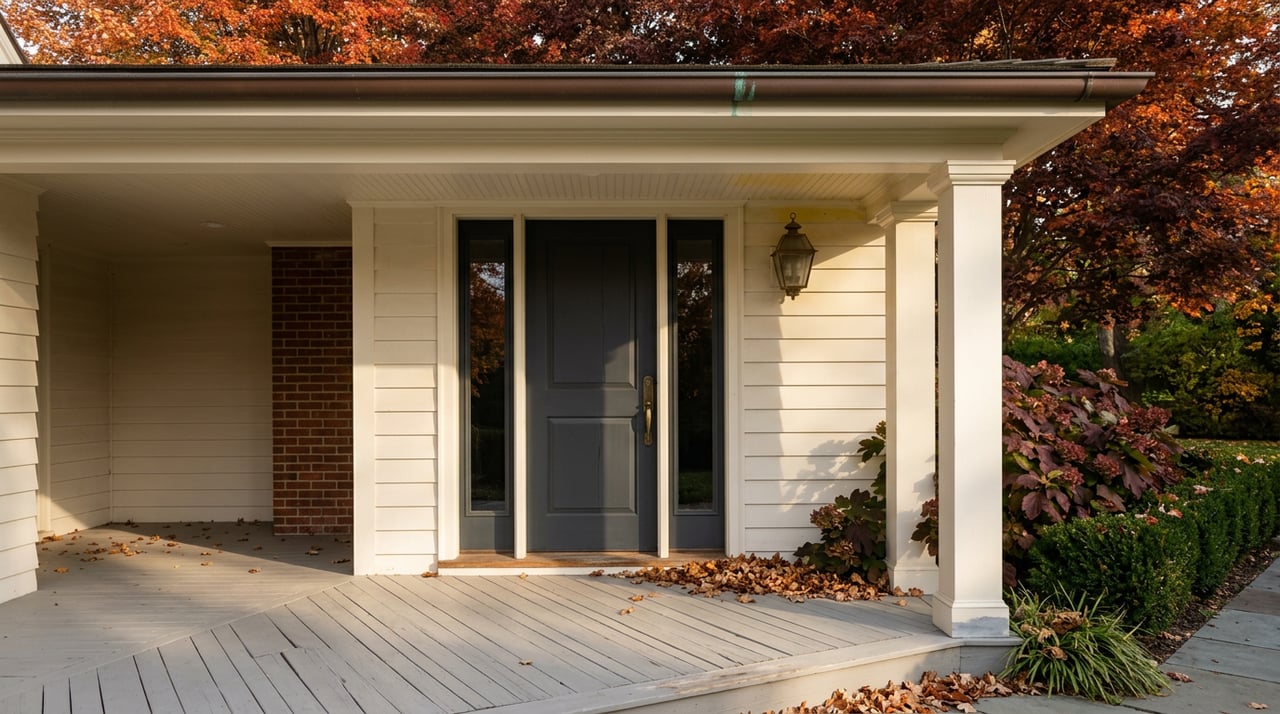
- Estate classification reflects scale, custom detailing, and quality materials, such as stonework, slate roofing, and fine millwork.
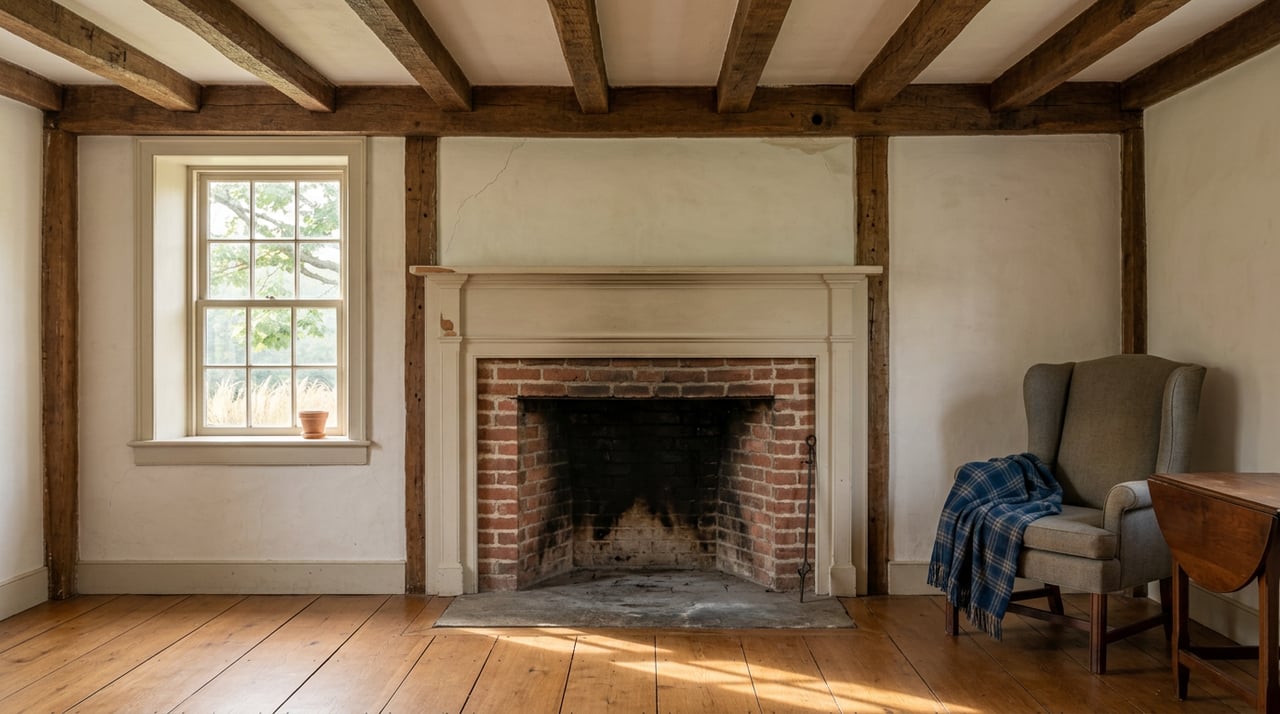
- Historic properties, including manor houses and farmsteads, can be estate-significant, especially when paired with preserved acreage.
Open space and views
- Proximity to conserved lands, including municipal preserves, county parks, or national refuge areas, can increase perceived seclusion and value.
- Adjacency to protected landscapes and long views are key drivers of the estate experience.
Rules, permits, and constraints
Understanding local and regional rules is essential for both usability and valuation.
Zoning and subdivision
- Minimum lot sizes, setbacks, and accessory use rules are set by the township zoning ordinance. These govern whether you can add structures, create a guest house, or subdivide.
- Some towns offer conservation or cluster options that preserve open space while allowing limited lots, which can influence how acreage is valued.
Environmental factors
- Wetlands, floodplains, and sensitive habitats reduce buildable area. Parcels near the Great Swamp or similar areas may fall under state or federal review.
- Highlands or watershed protections can restrict density or require permits. Verify whether the property lies in a designated protection area.
- Soil conditions and slopes affect septic capacity, construction cost, and the placement of future improvements.
Wells, septic, and services
- Many Harding estates use private wells and septic systems. Expect inspections, and budget for maintenance or upgrades.
- Confirm well yield, water quality, and septic permit history with the local health department.
- Remote or heavily wooded settings can affect emergency response times and homeowner insurance costs.
Easements and title
- Conservation easements and deed restrictions are common on historic or conservation-minded parcels. They can permanently limit development and affect marketability.
- Always review the deed, title report, and any open space records before you commit to a deal.
How estate features impact search and sale
Smarter search strategies
- Use acreage filters and targeted keywords for amenities, such as guest house, barn, equestrian, pool, or gated entry.
- Expect a “thin” market for true estates. Comps are less frequent, so widen your date range and geographic radius to assemble a meaningful set.
Marketing that works
- Elevate the visuals. Aerials, drone video, seasonal photography, and site plans that illustrate acreage and building envelopes are essential.
- Tell the experience. Highlight privacy, the approach to the home, adjacency to preserved land, recreational features, and any architectural provenance.
- Gather documents early. Surveys, permits, well and septic tests, easement records, and maintenance logs build buyer confidence and speed up diligence.
Pricing and appraisal notes
- For large parcels, land often carries a significant share of value, especially when it is usable, scenic, and adjacent to conserved lands.
- Appraisers may adjust for non-marketable acreage, like wetlands or encumbered areas, and will often rely on a wider area and time horizon for comps.
- Pricing is shaped by tax rates, school reputation, commute access to employment centers such as New York City, and the current inventory of comparable estates.
Due diligence checklist
Use this list to reduce surprises and protect value.
- Confirm zoning district, permitted uses, and minimum lot sizes with the township.
- Order a recent boundary survey, and verify setbacks, building envelopes, and any prior subdivision actions.
- Obtain septic inspection and percolation records, and complete a well test for yield and water quality with licensed professionals.
- Review deed and title for easements, rights of way, conservation restrictions, or covenants.
- Check environmental layers for wetlands, floodplains, or Highlands or watershed designations.
- If you plan tree work or worry about specimen trees, get an arborist report.
- Verify emergency access and discuss insurance implications for wooded or remote settings.
- Compile maintenance records for roofs, HVAC, pools, septic, and any outbuildings.
- Sellers should prepare a site plan and professional aerials, and consider pre-listing inspections to streamline buyer confidence.
The bottom line for Harding
An estate in Harding Township is defined by more than a big house. It is the combination of usable multi-acre land, privacy, amenities and outbuildings, architectural quality, and a setting that often ties into preserved open space. Pair those qualities with smart due diligence and a targeted marketing plan, and you position your property to stand out in a thin, high-value market.
Ready to align your search or sale with a design-forward, strategy-led plan tailored to Harding estates? Connect with Julia Kovacs for boutique brokerage, integrated staging and design, and data-informed pricing that maximizes results.
FAQs
How many acres define an estate in Harding Township?
- There is no legal threshold. In Harding, estates typically sit on multiple acres, with a focus on usable land after accounting for setbacks and environmental limits.
Can I subdivide an estate parcel in Harding Township?
- It depends on zoning, minimum lot sizes, and any deed or conservation restrictions. Confirm with the municipal planning and zoning offices and review the title.
Do Harding estates usually have public water and sewer?
- Many large-lot homes rely on private wells and septic systems. Verify service availability and review permits and testing with the local health department.
How do taxes and insurance affect Harding estate ownership?
- Higher-value properties often carry higher taxes, and insurance may be higher for remote or wooded parcels or for structures like barns. Obtain insurer quotes early.
How do I find comps for a unique Harding estate?
- Expand your search area and time frame, focus on similar acreage and amenities, and consult appraisers familiar with rural and high-end properties.